
Rank in Every Country You Sell To.
Selling abroad does not mean your site shows up abroad. I set up your website so Google shows the right language and the right country version to every searcher, then build rankings market by market: the US, UK, Europe, Saudi Arabia, the UAE and beyond.
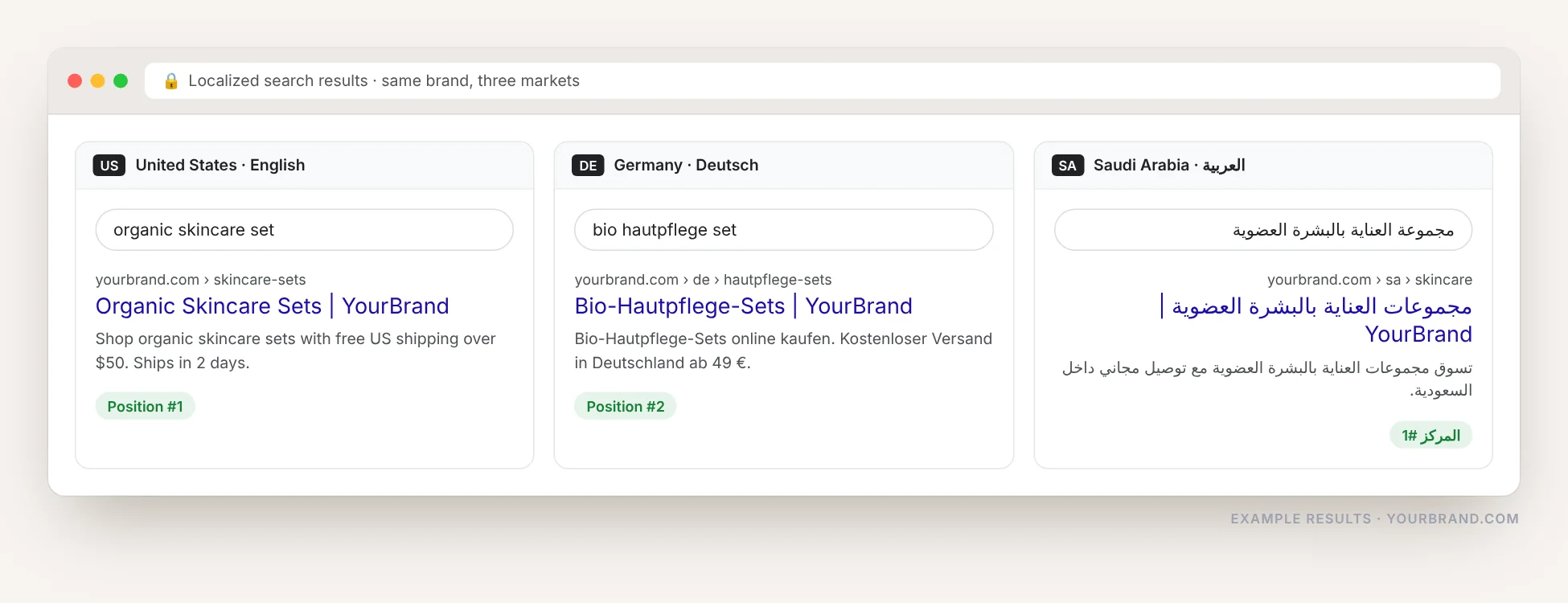
Translation Alone Does Not Rank
Most businesses translate their pages, publish them and wait. Then the German page shows to British searchers, the English page outranks the Arabic one in Riyadh, and Google treats the copies as duplicate content.
International SEO fixes the three things Google needs to get this right:
- Signals: hreflang, canonical and language tags that tell Google which page is for which country
- Structure: a URL setup that lets each market build authority without splitting your site
- Localization: keywords, prices, currency, addresses and content written for how each market actually searches
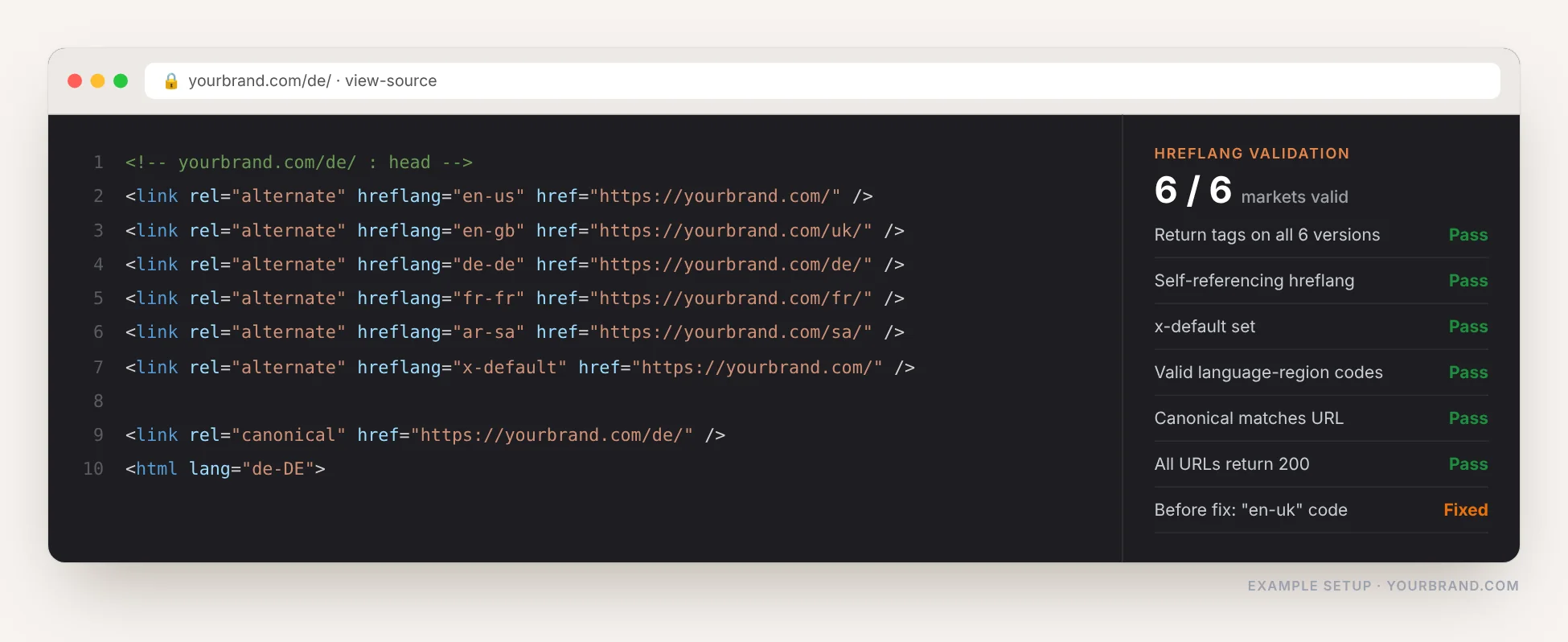
Hreflang Done Right
Hreflang is how you tell Google “this page is for Germany, this one is for the UK”. It is also the most commonly broken part of international SEO: one missing return tag or a wrong code like en-uk and Google ignores the whole set.
- Every country version links to every other, and to itself
- Correct language and region codes, plus an x-default page
- Canonical tags that agree with hreflang, never against it
- Checked in Search Console after launch, then monitored
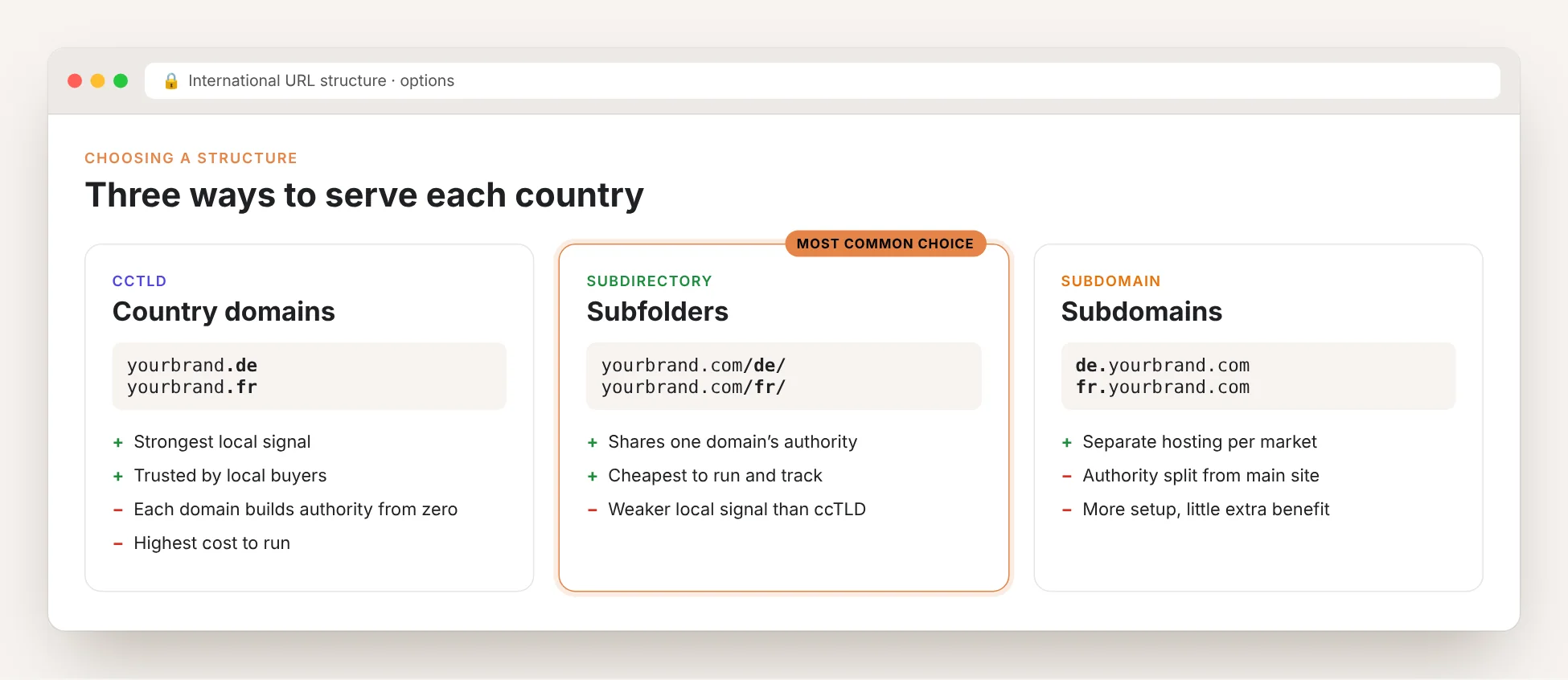
The Right URL Structure for Each Market
Country domains, subfolders or subdomains. Each one changes how authority is shared, how much the setup costs and how strong the local signal is. I recommend the one that fits your budget and markets, and migrate it without losing rankings.
Signs Your International SEO Is Leaking Traffic
- The wrong country or language version ranks in Google
- Translated pages treated as duplicate content and filtered out
- Hreflang errors in Search Console, or no hreflang at all
- Automatic IP redirects that stop Google from seeing your other versions
- Keywords translated word for word instead of researched per market
- Prices, currency and shipping details that do not match the country
- Arabic or other right-to-left pages that break on mobile
- No local links or mentions in the new market
International SEO Services I Offer
International SEO Audit
Hreflang, canonicals, redirects, indexing and rankings checked for every country and language version you have.
Hreflang Setup & Repair
Hreflang added or fixed across your whole site, in the head, sitemap or headers, and validated in Search Console.
URL Structure & Migration
The right structure for your markets, and a safe migration plan with redirects so no rankings are lost.
Market Keyword Research
Keywords researched in each language and country, based on what local buyers actually type, not a translation.
Content Localization
Titles, meta, product and service pages adapted for each market: currency, units, addresses, tone and RTL layout for Arabic.
Local Links & Authority
Links and mentions from sites in each target country, so every market version earns trust in its own region.
Every Market Measured Separately
A single traffic number hides what is happening abroad. I report each country on its own, straight from your Google Search Console: clicks, impressions, CTR and average position per market.
- Clicks and rankings for each target country
- Hreflang and indexing errors tracked to zero
- Top pages and keywords in every language
- What was done this month and what is next
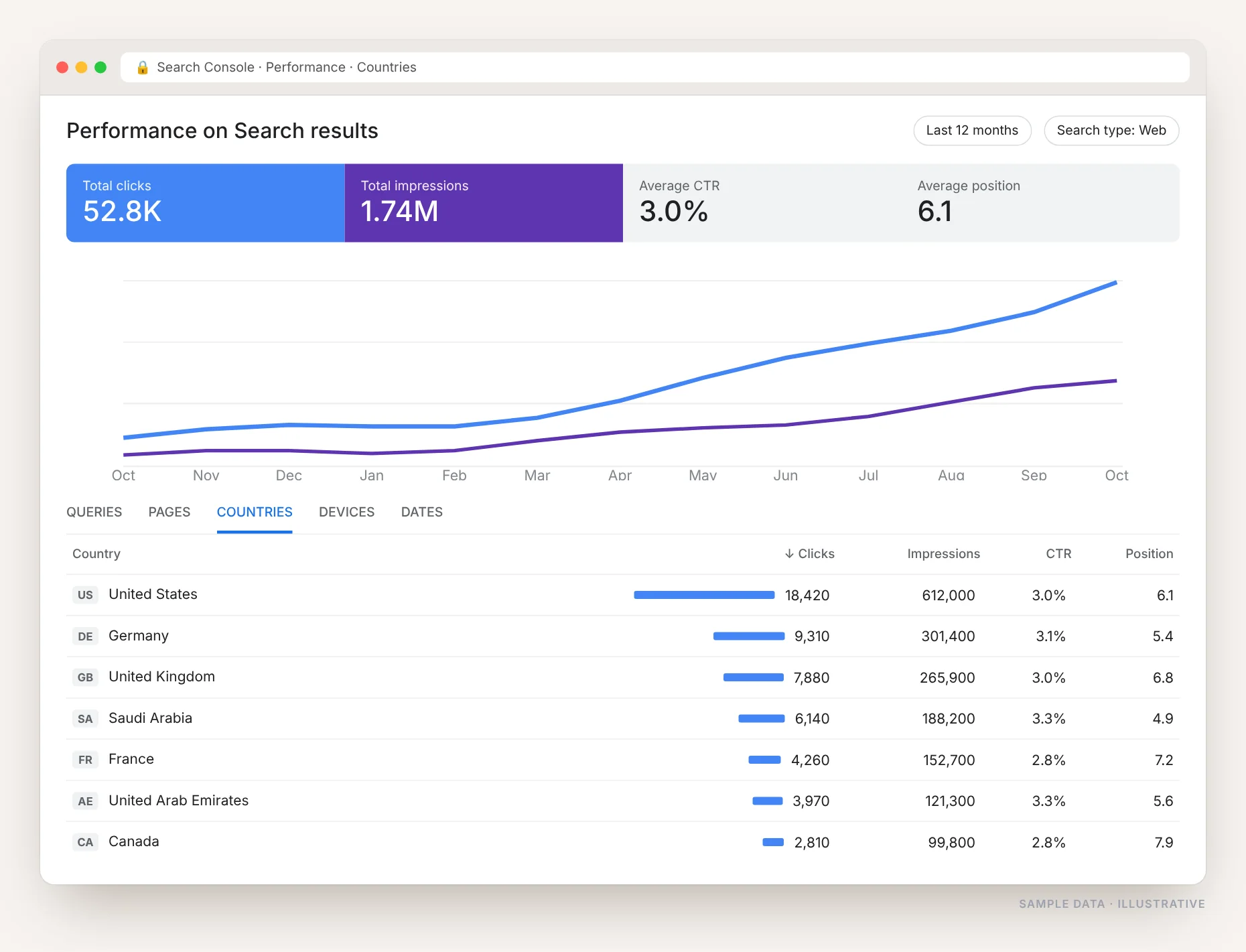
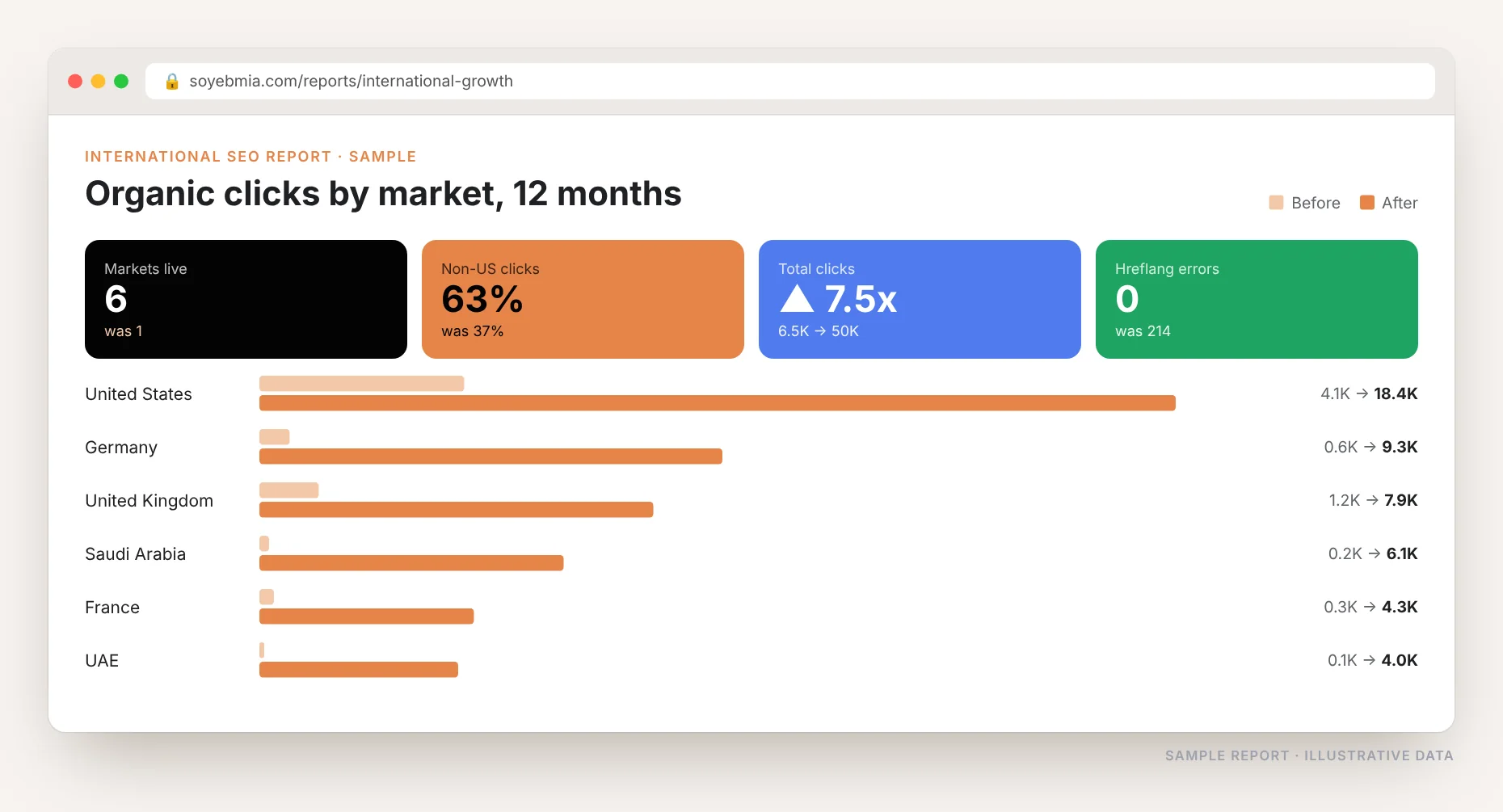
Growth Country by Country
What a complete international setup looks like after twelve months: new markets live, hreflang errors gone, and most organic clicks now coming from outside the home country.
My International SEO Process
Audit
Current versions, hreflang, indexing and rankings in every market you target.
Plan
URL structure, priority markets and keyword research per language.
Build
Hreflang, localized pages, technical fixes and local links.
Track
Clicks and rankings reported per country every month.
Who This Is For
- Online stores shipping to more than one country
- Service businesses expanding into the Gulf, Europe or North America
- Companies with English and Arabic versions of the same site
- SaaS and B2B brands selling to customers worldwide
- Sites where the wrong country version keeps showing in Google
- Businesses planning a move to new country domains or subfolders
International SEO Questions, Answered
What is international SEO?
International SEO is the work of making your website rank in more than one country or language. It covers hreflang tags, URL structure, localized keywords and content, technical setup and local links, so Google shows each searcher the right version of your site.
What is hreflang and do I need it?
Hreflang is a tag that tells Google which language and country each page is for. If you have the same content for more than one country or language, you need it. Without it, Google may show the wrong version or treat your pages as duplicates.
Should I use country domains, subfolders or subdomains?
For most businesses, subfolders such as yourbrand.com/de/ work best because every market shares one domain’s authority and the setup is cheaper to run. Country domains give a stronger local signal but each one starts from zero. I recommend based on your budget, markets and current site.
Is translating my website enough?
No. People in each country search with their own words, and a direct translation often targets keywords nobody uses. Each market needs its own keyword research, plus local prices, currency, shipping details and contact information.
Can you handle Arabic websites?
Yes. I work with English and Arabic sites for Saudi Arabia, the UAE and the wider Gulf, including right-to-left layouts, Arabic keyword research and hreflang between Arabic and English versions.
How long does international SEO take?
Technical fixes like hreflang usually show in Search Console within a few weeks. Rankings in a new market typically build over three to six months, depending on competition and how much authority your main site already has.
Ready to Grow Beyond One Country?
Get a free international SEO audit covering hreflang, URL structure and how each of your markets is performing in Google today.